
Finding Crisp County Recent Arrests
The sheriff's site lists no routine name roster. There is no same-day booking table either. Crisp County publishes no weekly arrest list for download. The official jail landing page describes detention services instead. The sheriff's news archive posts selected events, and a release may name the incident, the agency, the charges listed, and the transport to jail. It is not a full count of everyone booked. For a person-specific check on recent arrests, VINE or a call to the detention center works best. Older lists and historical records call for an open-records request to the sheriff's records custodian.
Two time windows call for different methods. The Arrests Last 24 Hours page covers the same-day check. Intake may still be underway at that point. The Police Blotter page explains how to rebuild a multi-day stretch from official releases, aggregate reports, and requested records. Neither page invents a feed Crisp County never published.
| Window | Best available route | Main limit |
|---|---|---|
| About 24 hours | VINE, detention-center call, then official news | Booking may take hours; news is selective |
| Several days | Official news plus a dated records request | No published complete blotter or rolloff rule |
| Historical | Booking register, court file, and archives | Custodians and retention periods differ |
Arrested Last Night in Crisp County
An arrest time is not a booking time. The gap can stretch for hours. The CCSO intake description puts the normal wait at two to eight hours, depending on charges, volume, and cooperation. Intake covers identity and warrant checks, health screening, a search, fingerprints, the booking photo, and entry into the jail computer. A late-night arrest may be invisible to public tools. Those steps have to finish first. Start with the arresting agency if known, then use the VINELink Custody Check and call the detention center when timing matters.
The sheriff's news archive can confirm some arrests. A missing post proves nothing. Releases are discretionary and may run days behind an event. Log the time of each custody check, and tell apart "just booked," "in custody," "released," and "transferred," since those labels mark changing states rather than a final outcome.
Crisp County Arrest Roster Access
The CCSO site map shows no public roster search form. That is not proof the jail lacks one. The public pages simply stay quiet about searchable fields, display cadence, photo availability, or how long an entry stays visible. So pick up the phone. The Crisp County Detention Center sits at 196 GA Highway 300 South in Cordele, with published lines (229) 276-2646 and (229) 276-2647. The main sheriff office number is (229) 276-2600.
| Needed fact | Ask or search by | Best channel |
|---|---|---|
| Current custody | Full name and booking ID if known | VINE, then detention center |
| Booking record | Name, date range, arresting agency | CCSO open-records request |
| Release or transfer | Name plus last known booking date | VINE alert or facility confirmation |
| Booking photo | Named booking and lawful-use affirmation | Records custodian, subject to Georgia law |
Use the official access path in order:
- Check the jail landing page for current contact information.
- Search VINE for custody status and note the check time.
- Call the detention center when a just-completed booking may not yet appear.
- Email openrecords@crispcounty.com for an existing register or date-range export.
The sheriff offers no branded roster app. VINELink is the documented mobile option, and it delivers status and alerts rather than a photo feed.
Where Crisp County Arrests Appear
Each official channel answers a different question. CCSO jail pages explain intake. VINE reports custody status. Sheriff releases document selected events, and court systems show later filings and outcomes, so none of them substitutes for the rest. Independent sites browse more easily, yet they can keep old entries after release, skip bookings, or stamp a posting date that differs from the booking date.
| Channel | Official? | What it can show |
|---|---|---|
| CCSO jail and records unit | Yes | Custody confirmation and releasable records by request |
| CCSO news and monthly reports | Yes | Selected arrest events and aggregate totals |
| VINE / VINELink | Official partner | Current custody state and release or transfer alerts |
| Georgia Gazette Crisp index | No | Independent booking pages, dates, reasons, sometimes photos |
| Mugshots.com Crisp index | No | Historical county entries, not a current roster |
Numbers can fill in part of the picture for Crisp County arrests. The sheriff's monthly report archive keeps tallies on bookings, releases, warrants served, citations, and transports each month. That confirms the arrest pipeline stays busy. It just does not attach names to the counts.
The official monthly-report archive is the county's public window into that activity.
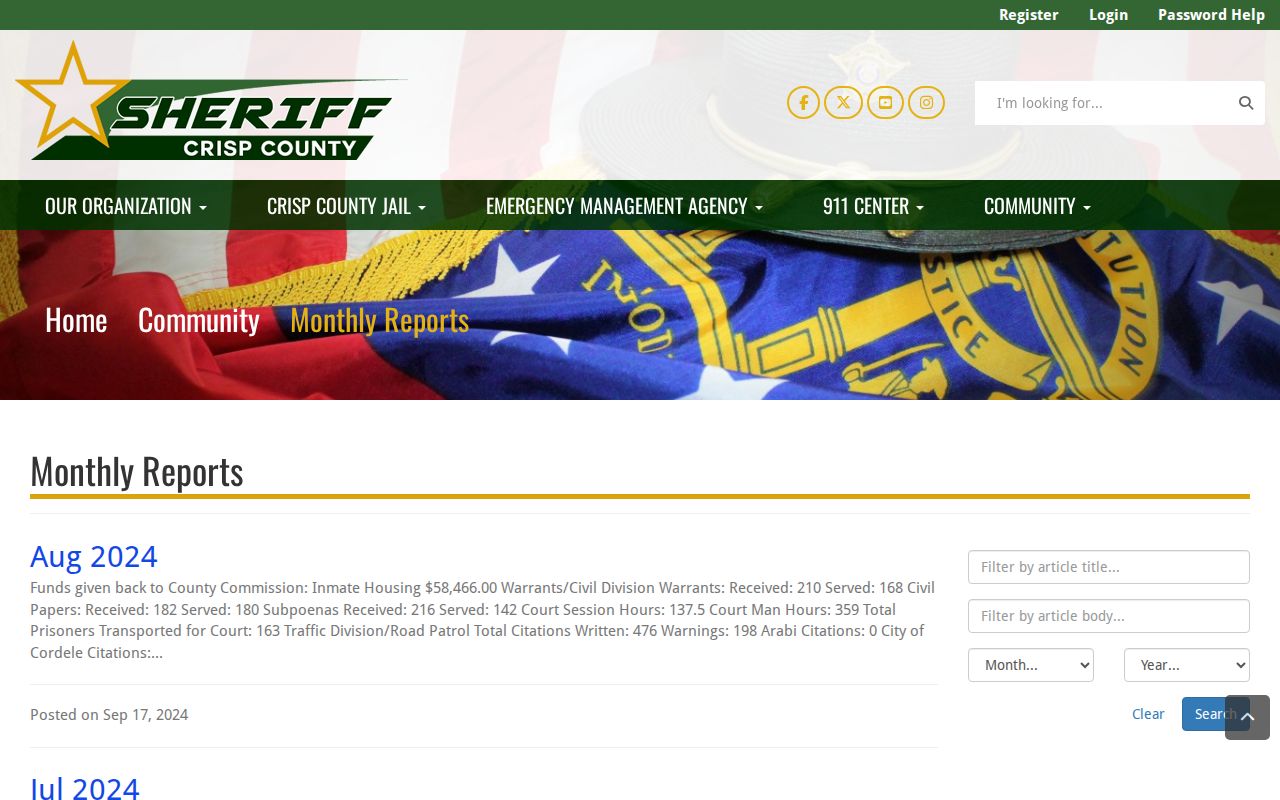
The archive is useful for scale and dates, never as a name-level arrest roster.
Recent Arrests by City
City police and county jail records are separate things. Cordele Recent Arrests covers the Cordele Police Department report repository, municipal court, and the CCSO booking path. Warwick Recent Arrests walks through the smaller municipal police footprint and documented transfers to county detention. Arabi Recent Arrests separates town and citation records from an actual jail booking. A county label can hide the arresting agency. Read that field first. Then find the custodian holding the booking record.
Crisp E-911 dispatches police, fire, medical, and sheriff services around the clock. Shared dispatch does not merge agency files. The officer's report, the CCSO booking entry, the VINE status, and the court docket can each carry a different custodian and timestamp.
Reading a Crisp County Arrest Record
Booking is the jail's intake after an arrest. CCSO describes the routine. Staff identify, search, photograph, fingerprint, and screen each person, check warrants, and enter the name into the jail computer. Bail comes later. A judicial official sets it along with the court date, and since the public site posts no field schema, request the booking sheet or jail-register export and name the fields you want.
| Field | What it means |
|---|---|
| Name and booking ID | The identity recorded by the jail and the local record key |
| Arresting agency | The agency credited with the arrest, which may differ from the jail custodian |
| Booking date and time | When intake was recorded, not necessarily the incident time |
| Charges as booked | Initial charges or shorthand, not a conviction |
| Bond or bail | An initial release condition that may later change |
| Court referral or date | The next listed court step, not the final disposition |
| Release or transfer | A later custody event that should include a date |
- Disposition
- The court's outcome for a charge, such as dismissal, plea, or verdict.
- Detainer
- A request by another authority to hold or notify before release.
- Arraignment
- A court appearance where the charge is formally presented and a plea may be entered.
Medical and mental-health screenings are part of intake. They are not normal roster fields. Fingerprints are identification records rather than public photographs, and an entry "housed for" another agency marks custody responsibility, not an added charge.
Crisp County Mugshots After Arrest
Every Crisp County booking includes a photograph. The sheriff's office confirms that step at intake. A searchable photo roster, though, is not part of the county's public site. Georgia's booking-photo statute defines these images and restricts how agencies may post or release them, with extra rules aimed at sites that charge for removal. A requester may need an affirmation. The current statutory wording sets the remaining conditions. For one named booking photo, ask the records custodian whether it is kept and can be released.
The official intake page documents the photography step:

The county publishes no photo gallery. Independent sites and local news sometimes fill that gap with a booking photo the sheriff's office never posted. Those entries can sit stale for months. They may also lag far behind the court outcome. The Georgia Department of Corrections is different. It can display an official image for someone serving time in the state system. That is a state-custody photograph, though, not evidence of a fresh Crisp County arrest.
Request a Crisp County Arrest Record
Records requests go to openrecords@crispcounty.com, the open-records address the sheriff's office lists. Office hours run weekdays, 8 a.m. to 5 p.m. County holidays are excluded. Keep the request narrow and ask for an existing record or export, since staff cannot be asked to build an analysis.
- State the person's recorded name, approximate booking date, and arresting agency.
- Ask for the booking sheet, jail-register entry, and release or transfer field if maintained.
- Request the booking photograph separately and acknowledge compliance with current Georgia law.
- Ask for electronic production and a fee estimate before work exceeds a stated limit.
- If anything is withheld, request the nonexempt portion and the exact exemption relied upon.
Georgia law sets the clock. O.C.G.A. §50-18-71 generally calls for a response within three business days when records exist. Otherwise, the agency explains availability and timing. Reasonable search and copy fees may apply. Active investigations can be withheld or redacted. So can protected victims, juvenile material, health data, security facts, and other exempt content.
Start corrections with the owning agency or court. Georgia Courts and the GBI note that record restriction does not erase every copy. Courts, local offices, publishers, and search engines may each hold one. Keep the final disposition and the official correction. A single removal rarely clears every indexed result.
Crisp Arrest Records Under Georgia Law
Public record does not mean published online. Georgia's Open Records Act opens a path to existing, nonexempt records held by Crisp County and other agencies. It never forces a live web roster. Booking photos get their own statute. The current text of O.C.G.A. §35-1-19 and the agency's own rules control, so no photo or field is promised before the custodian reviews the request.
Retention rules add another layer. The Georgia Archives retention schedule sets minimum periods for local public-safety records. Jail booking records stay ten years after release. Jail registers last ten years after the final entry. Booking summary statistics run five years, with separate rules for warrants and dispatch logs. Even a long retention period promises no web copy, no format guarantee, and no separately indexed photograph.
The state retention schedule identifies the relevant record series:
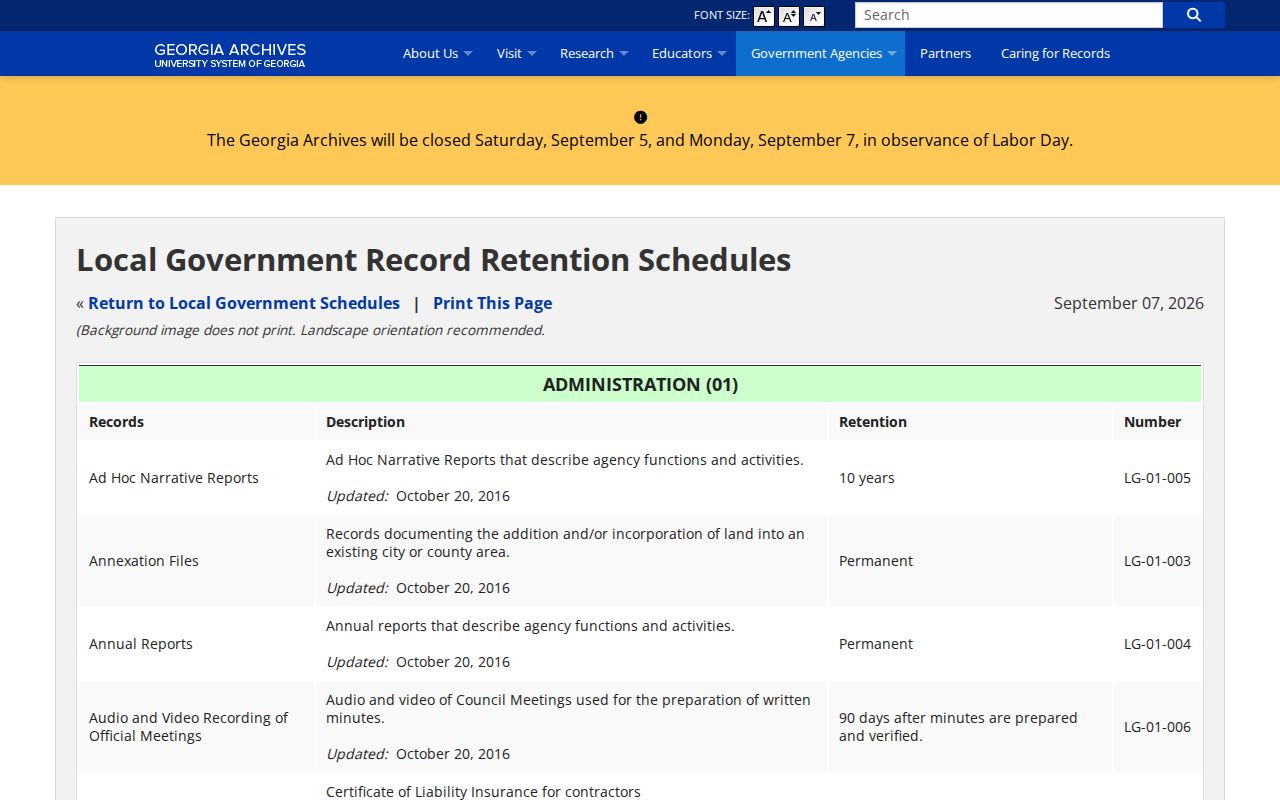
Use the schedule to frame a precise request, then confirm the custodian's adopted practice.
Georgia offers consumers a statutory exit from commercial mugshot pages. The route runs through the Attorney General under O.C.G.A. §10-1-393.5. The conditions are strict. The Attorney General's mugshot guidance asks for written notice naming the person, birth date, arrest date, and arresting agency. It must be delivered the way the statute spells out. Removal must come within thirty days. No fee applies. Skip paid removal middlemen. Read the law plus the final case papers before assuming a page qualifies.
The official Georgia consumer guidance explains the no-charge statutory process:
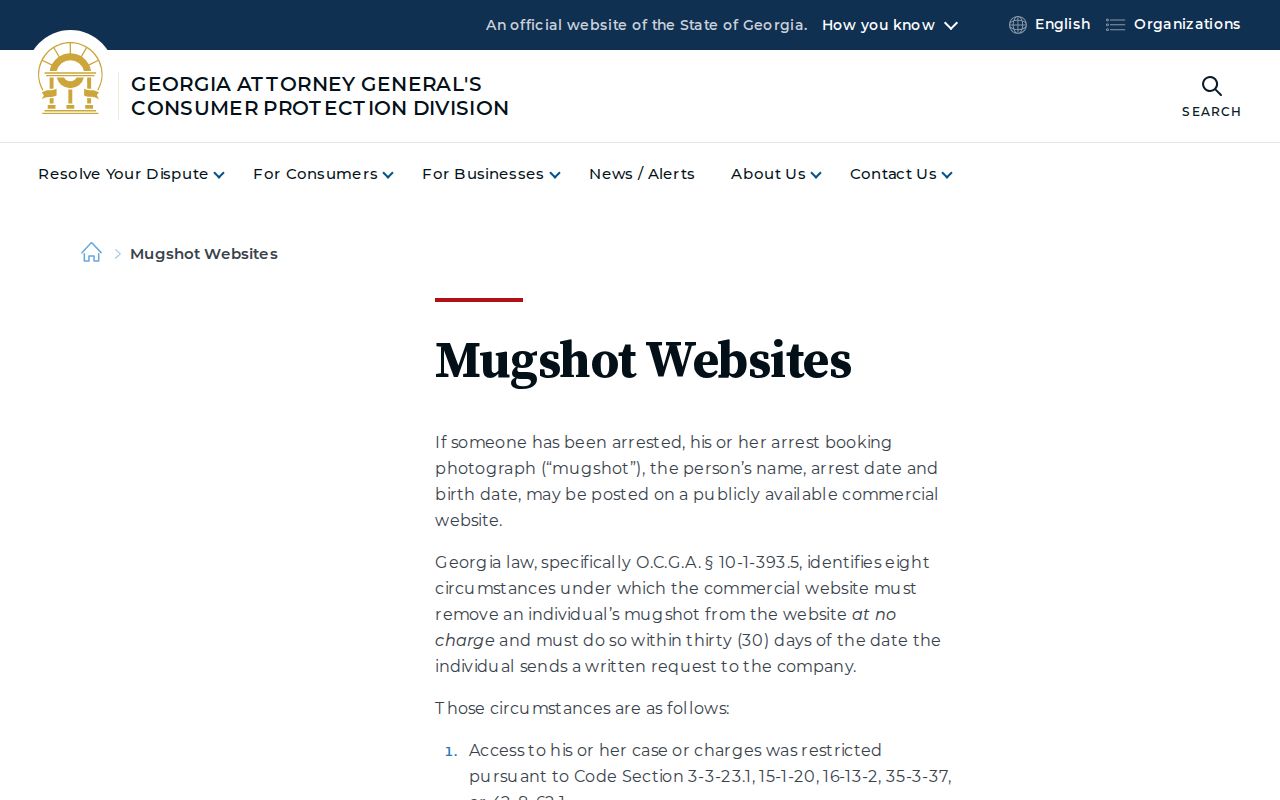
Correction of the source record and removal from an independent publisher are separate tasks.
Crisp County Arrest Warrants
The CCSO site has no warrant search. It lists no current most-wanted page either. Old wanted notices do appear in the sheriff's news archive, and at least one later gained an in-custody update. Read the post date and the current status together. Monthly reports count warrants received and served, but only in the aggregate. Those totals prove nothing about a named person, whose warrant may have been served, recalled, quashed, or changed by a court.
The official historical wanted-post example demonstrates the status-update pattern:
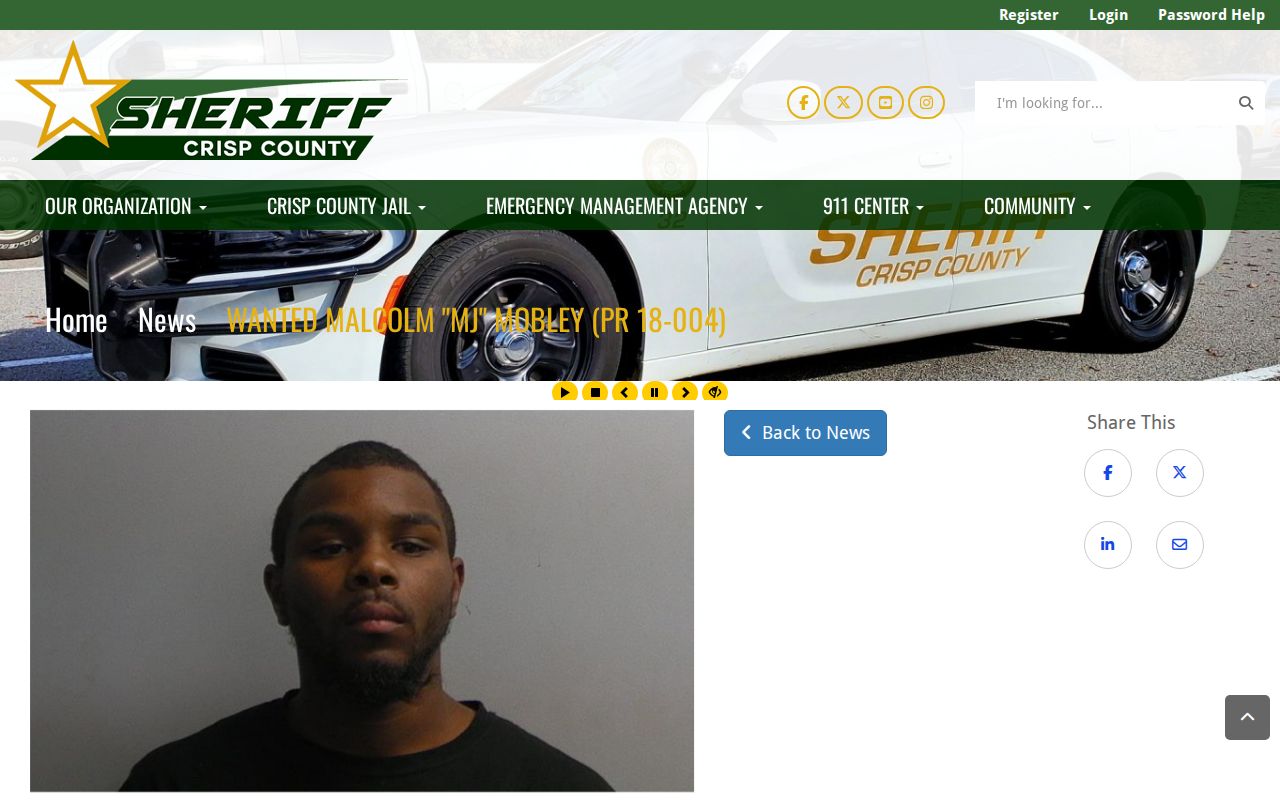
Start with the issuing court. Ask which court or agency issued the warrant and which one controls it now. Magistrate Court handles many arrest or search warrants. Municipal or superior courts control other matters. Anyone who believes a Crisp County warrant is mistaken should reach a lawyer or the issuing court through an official channel. Never approach or confront someone over an online post. Call 911 for emergencies, or use CCSO Crime Stopper for a non-emergency tip.
After a Crisp County Arrest
Arrest records in Crisp County live in several offices. The arresting agency, the jail, and the court each keep their own files. A jail booking entry might list initial charges and a bond amount. The court docket, though, tracks what actually happened in the case. Cordele Municipal Court takes care of city-level matters. Superior and juvenile records sit with the Crisp County Clerk of Superior and Juvenile Courts. Magistrate Court runs its own cases and also handles warrants. For superior-court searches, Georgia Courts' e-access directory routes you to a provider that may ask you to create an account.
Getting out of jail is only one step. Read the docket to see whether a charge was dismissed, reduced, pleaded out, or tried before calling it an outcome.
Custody Beyond Crisp County
A Crisp County booking is not always the end of the road. A person arrested here may stay local. Or the person may move to state custody, transfer to federal housing, or get transported for a court date. The Crisp County Detention Center opened in 1991. It holds 224 beds. It is also approved for federal contract housing. That arrangement still does not put every federal detainee in the federal prison locator. Housed for, transported, and sentenced are three different situations.
Each locator covers a different branch of the system. The Georgia Department of Corrections offender search works only for state custody. GDC sometimes shows a photo, but a missing photo does not erase a county arrest. The Federal Bureau of Prisons locator reaches back to 1982 and shows no mugshots. For immigration holds, use the ICE detainee locator. None of them beats a fresh CCSO or VINE check.